


Loan

Published on:
Last Updated:
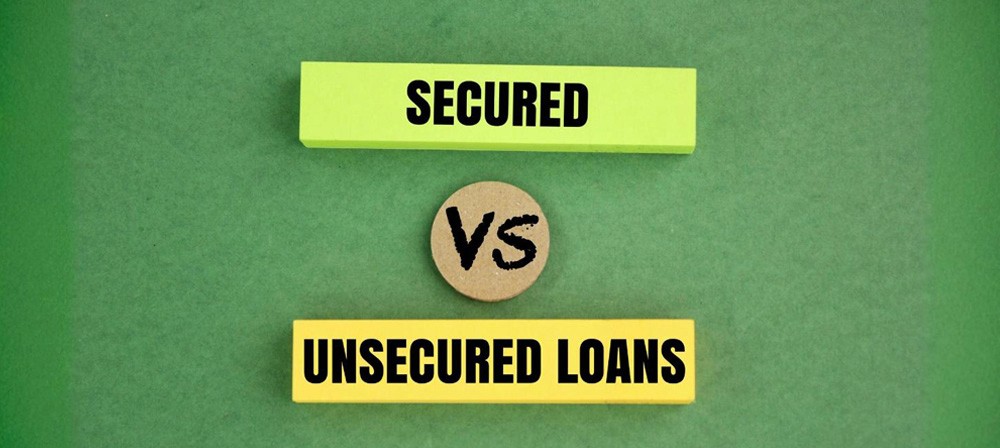
When you take a loan, the biggest difference between a secured and an unsecured loan is collateral.
A secured loan requires you to pledge an asset, such as property, gold or a vehicle, as security for the loan. An unsecured loan does not require collateral. Instead, the lender mainly looks at factors such as your income, credit history and ability to repay.
Because the lender has an asset as security, secured loans may offer lower interest rates or higher borrowing limits. Unsecured loans, on the other hand, can be more convenient because you don't have to put an asset at risk.
So, which one should you choose? It depends on how much you need to borrow, your financial profile, whether you have an eligible asset and how comfortable you are using that asset as collateral.
What Is an Unsecured Loan?
An unsecured loan does not require you to pledge an asset as collateral.
Instead, the lender assesses your ability to repay based on factors such as your income, credit history, credit score, existing financial obligations and other eligibility criteria.
Since there is no collateral backing the loan, the lender takes on more risk. As a result, unsecured loans may have comparatively higher interest rates or lower borrowing limits than some secured loans.
For example: a personal loan is generally unsecured. If you need ₹2 lakh for a planned expense and meet the lender's eligibility criteria, you can borrow the approved amount without pledging an asset and repay it through EMIs.
Common Examples of Unsecured Loans and Credit
Personal loans: Usually unsecured and can be used for eligible personal expenses.
Credit cards: Most conventional credit cards do not require collateral.
Some education loans: Certain education loans may be available without collateral, depending on the lender, loan amount and applicable scheme.
Pros and Cons of Unsecured Loans
Pros
No collateral is required
You don't need to own an eligible asset to borrow
Processing may be quicker when collateral verification isn't required
Personal loans can offer flexibility in how funds are used, subject to the loan terms
Cons
Interest rates may be higher than comparable secured loans
Lenders may place greater emphasis on your credit profile and income
Borrowing limits may be lower for some products
Missed repayments can affect your credit history and lead to applicable charges or recovery action
What Is a Secured Loan?
A secured loan is backed by an asset that you pledge to the lender as collateral.
For example: if you take a gold loan, your gold is pledged as security until the loan is repaid. If you repay the loan as agreed, the asset is released according to the loan terms. If you default, the lender may have the right to take action against the pledged asset to recover the outstanding amount, subject to the loan agreement and applicable rules.
Since collateral reduces the lender's risk, secured loans may offer comparatively lower interest rates, larger loan amounts or longer repayment periods. However, the exact terms depend on the lender, loan type and your eligibility.
Common Examples of Secured Loans
Home loan: The property being financed generally acts as security for the loan.
Vehicle loan: The financed vehicle usually serves as collateral until the loan is repaid.
Gold loan: Eligible gold is pledged against the amount borrowed.
Loan against property: An eligible residential or commercial property is pledged to raise funds.
Loan against eligible financial assets: Some lenders offer loans against assets such as fixed deposits or securities, subject to their terms.
Pros and Cons of Secured Loans
Pros
May come with lower interest rates
Can allow higher borrowing amounts
Some products offer longer repayment periods
May be suitable for borrowers with eligible assets
Cons
The pledged asset is at risk if you default
Asset valuation and verification may be required
The application process can involve more documentation
You need an asset that meets the lender's requirements
Secured vs Unsecured Loan: Key Differences
Factor | Secured Loan | Unsecured Loan |
|---|---|---|
Collateral | Required | Not required |
Lender's risk | Generally lower because of collateral | Generally higher |
Interest rate | Usually comparatively lower | Usually comparatively higher |
Loan amount | Can be higher depending on the asset and eligibility | May be lower depending on your profile |
Tenure | Can be longer for some products | Often shorter, depending on the product |
Credit Assessment | Credit profile and collateral are considered | Greater focus on creditworthiness and repayment capacity |
Processing | May take longer due to asset verification | May be quicker |
Asset at risk | Yes, if you default | No pledged asset |
Best suited for | Larger borrowing needs where collateral is available | Borrowing without pledging an asset |
Secured or Unsecured Loan: Which One Should You Choose?
There isn't one option that is better for everyone.
A secured loan may make more sense if you need a larger amount, have an eligible asset and are comfortable pledging it as collateral. The potentially lower interest rate can also make it attractive for certain borrowing needs.
An unsecured loan may be more suitable if you don't want to pledge an asset or need funds without going through collateral valuation. Your income, credit profile and repayment capacity will play a bigger role in determining your eligibility and loan terms.
Before choosing, don't look at the interest rate alone. Consider the total borrowing cost, EMI, tenure, applicable fees and the consequences of missing repayments.
What Should You Consider Before Choosing a Loan?
Before signing up for either type of loan, ask yourself:
How much do I actually need to borrow?
Can I comfortably afford the EMI every month?
Am I willing to pledge an asset?
What is the total amount I will repay?
What interest rate and other charges apply?
How long will I be in debt?
What happens if I miss an EMI?
Are there any prepayment or foreclosure conditions?
Looking at these factors together gives you a clearer picture than simply choosing the loan with the lowest advertised interest rate.
Final Takeaway
The choice between a secured and unsecured loan comes down to one key question: are you comfortable pledging an asset to borrow money?
A secured loan can be useful when you need a larger amount and have suitable collateral. An unsecured loan can be more convenient when you want to borrow without putting an asset at risk.
Whichever option you choose, look beyond the advertised interest rate. Check the EMI, total repayment, fees, tenure and repayment conditions, and make sure the loan fits comfortably within your budget.
Get the Cash You Need Without Any Collateral
Enjoy the freedom of an unsecured credit line with zero assets required and instant approval.
FAQs
Is a personal loan secured or unsecured?
Most personal loans are unsecured, which means you generally don't need to pledge an asset as collateral. However, loan structures can vary, so always check the specific lender's terms.
Which is better, a secured or unsecured loan?
Neither is automatically better. A secured loan may offer lower rates or higher borrowing limits because it is backed by collateral. An unsecured loan lets you borrow without pledging an asset. The better option depends on your borrowing needs, financial profile and comfort with the associated risks.
Is a home loan secured or unsecured?
A home loan is generally a secured loan because the property being financed serves as security for the loan.
Do unsecured loans have higher interest rates?
They generally can. Since the lender doesn't have collateral to reduce its risk, unsecured loans may carry higher interest rates than comparable secured loans. The actual rate depends on the lender and the borrower's profile.
Can I get a secured loan with a low credit score?
Possibly, but collateral does not guarantee approval. Lenders may still consider your credit history, income, repayment capacity, the value of the collateral and other eligibility requirements.
What happens if I don't repay a secured loan?
If you fail to repay, the lender may take action against the pledged asset to recover the outstanding amount, subject to the loan agreement and applicable rules.
What happens if I don't repay an unsecured loan?
There is no pledged collateral to directly repossess, but missed payments can result in applicable charges, recovery action and damage to your credit history.
Can an unsecured loan become a secured loan?
Not automatically. Secured and unsecured loans have different structures. If you want borrowing backed by collateral, you would generally need to apply for a suitable secured loan or refinance under applicable terms.
Naina Rajgopalan
Naina Rajgopalan has a thing for numbers and a deep fascination to learn about all things finance. She's been money-wise from a young age and has always shared her knowledge and tips with those around her. Being a part of the content team at Freo, a neobank that offers flexible and customised financial products, along with benefits such as insurance on balance, safe & secure banking, and so on, Naina stays updated with the latest of what happens in the banking and fintech industries. She has taken upon herself to share her knowledge with readers across all walks of life to help them manage their finances and budgets better, so they can make better decisions while spending, borrowing, investing and saving.